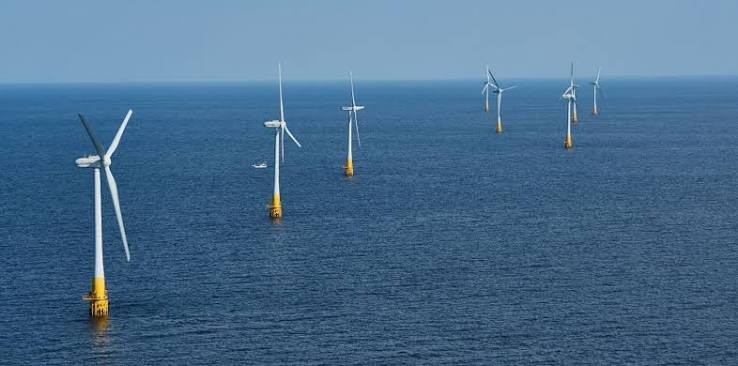

Why floating wind?
At WindEurope last week, this was one of the clearest themes coming through in our conversations with developers, EPCs and engineering leaders. Floating wind is still viewed as a gamble, though particularly in markets where fixed-bottom wind isn’t viable, that gamble is often a necessary one.
Countries like Japan are a good example of this. Deep waters and seabed constraints mean traditional fixed-bottom foundations aren’t commercially or technically practical at scale. Floating wind opens up access to these deeper-water sites, unlocking significant new capacity potential.
While the concept itself has been around for some time, this scale is still new. Turbines are getting bigger, platforms are becoming stronger and mooring systems are more advanced than ever. At the same time, investor confidence has grown and governments are increasingly backing floating wind as part of their long-term energy strategies.
Potential challenges
The ‘gamble’ comes from whether or not the industry can support the execution of such large-scale projects.
This is where the industry begins to face real pressure. Moving from 50MW or 100MW pilot projects to gigawatt-scale developments introduces an entirely different level of complexity.
Port infrastructure is one of the clearest examples. Floating wind relies on large-scale assembly, storage and tow-out operations, and many ports simply aren’t equipped for that yet. Quayside strength, water depth, laydown space and fabrication capabilities all become critical factors in delivery.
Then there’s vessel availability. Installation strategies for floating projects differ significantly from fixed-bottom offshore wind, and there’s already heavy demand on specialist vessels across offshore energy markets.
Mooring and subsea systems add another layer of complexity. Unlike fixed-bottom projects, floating wind introduces dynamic mooring systems, more movement in subsea cable infrastructure, and engineering challenges that require highly specialised expertise.
Grid connection is another challenge that often gets less attention than turbine technology, but it’s just as critical. Floating wind projects are often located further offshore, meaning longer export cable routes, greater infrastructure demands and more complex integration into existing energy networks.
All of these become key factors in whether a project can be delivered, and as floating wind scales, those challenges will only increase.
Talent shortage
For all the delivery risks, the one we hear about most from clients is talent. Because while it’s true that floating wind requires more people, it also requires a different skillset. Floating wind is often treated as an extension of fixed-bottom offshore wind, but the delivery model is different enough that relying on the same talent pools can create major gaps.
We’re already seeing growing demand for offshore construction specialists, marine and mooring engineers, subsea cable experts and project planners with offshore experience. These are niche skillsets and hard to find, often coming from sectors like oil and gas or marine engineering, which only increases competition and the risk of delays.
The future of floating wind
This is where the conversation around floating wind needs to change. For years, the focus has been on whether it can work, scale and become commercially viable, and increasingly the answer is yes. But the important question now is whether the industry is ready to deliver it at scale.
Floating wind is now its own market, with its own delivery models and talent needs, and companies that recognise that early will be far better placed as projects continue to scale.
Japan’s 1GW project may be the headline today, but it won’t be the last, it’s a sign of where offshore wind is heading globally. The opportunity is huge, but with that comes complexity. And right now, complexity is scaling faster than capability, which presents a major challenge for the industry going forward.
If you’re looking at floating wind, it’s worth thinking early about how your team is set up to deliver it. Because in this market, delivery capability may become the biggest differentiator of all.